

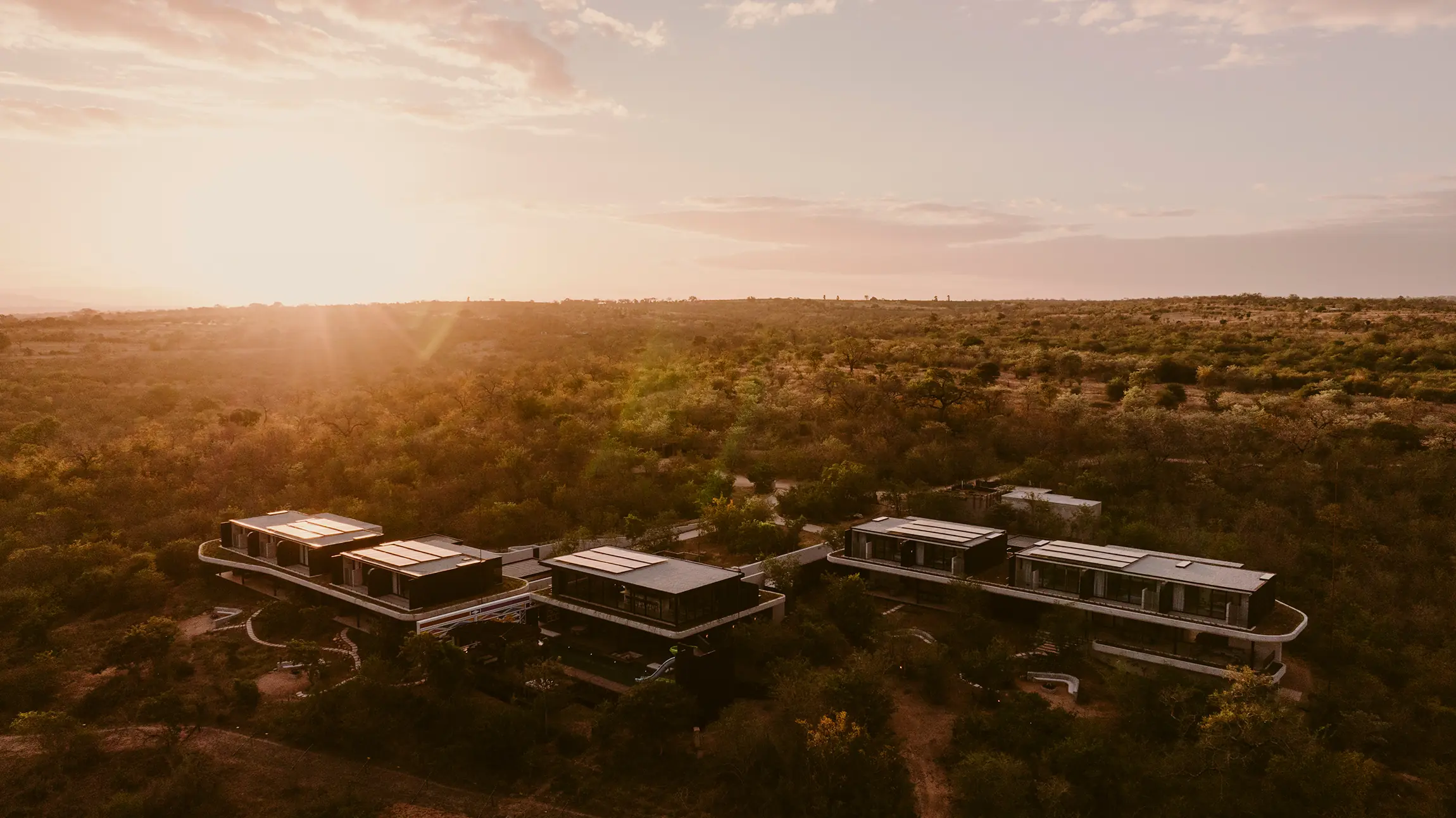
Kruger National Park stretches roughly 220 miles along South Africa’s north-eastern border and is one of the world’s most accessible Big Five safari destinations.
May to September (dry season) offers the easiest game viewing, while November to April brings lush scenery and newborn wildlife.
The southern region around Skukuza has the highest concentration of game and the widest choice of places to stay, including the private villas at Shiviko Kruger.
Visitors can fly into Skukuza, Kruger Mpumalanga International or Nelspruit, or self-drive from Johannesburg in roughly five to six hours.
Both self-drive and fully guided safaris are viable in Kruger, unlike most private reserves, which is part of what makes it such a flexible first safari destination.

What Is Kruger National Park?
Kruger National Park is South Africa’s greatest game reserve: nearly two million hectares of bushveld running roughly 220 miles (350 km) down the country’s north-eastern edge, with Mozambique waiting on the far side of the border. It is home to the Big Five, and in my view it is the most generous place in Africa to take a first safari.
I have spent twenty years in the bush, and Kruger still has a way of humbling me. People hear “national park” and picture a field with a gate. Kruger is closer to a small country, about the size of Wales, stitched together by rivers like the Sabie, the Olifants and the Letaba, with granite koppies in the south, open golden plains in the middle and mopane woodland and baobabs in the far north. More than a hundred and forty mammal species live here, alongside hundreds of birds, and on a good morning it can feel as though all of them have turned up at once.
If you are still asking where Kruger National Park is, and what country it sits in, the answer is South Africa, spread across the Limpopo and Mpumalanga provinces. Whether you end up with us at Shiviko Kruger or somewhere else entirely, I want this guide to save you the guesswork I see first-time visitors wrestle with every season.

Where Is Kruger National Park & How to Get There
Kruger National Park, in South Africa’s north-east, is a few hours’ drive from Johannesburg and part of a much larger wild landscape. The park sits at the heart of what people often call the Greater Kruger National Park, where private reserves share unfenced boundaries with the park itself. How you arrive depends mostly on how much of your holiday you want to spend in transit.
Flying Into Kruger
Three airports serve the park, and each suits a different trip. Skukuza has its own airstrip right inside the park, with regular flights from Johannesburg and Cape Town, and it is the closest airport to Shiviko Kruger, which means no long transfer after you land and a good deal more time with your feet up. Kruger Mpumalanga International, near Nelspruit, is the larger gateway and works well if you are connecting from other cities or hiring a car. Hoedspruit is the natural choice for central Kruger and the private reserves further north. Schedules change from season to season, so check current flights before you book anything non-refundable.
If you are flying to Shiviko Kruger, the simplest route is to read through getting to Shiviko Kruger before you choose an airport.
Driving from Johannesburg
For many travellers, the drive is part of the adventure. Kruger National Park from Johannesburg takes roughly five to six hours by road to the southern gates, and the highways are good, though the trucks are many and the tolls add up. My advice is to leave early, before the traffic builds, and to aim to be through the park gates well before dark. Gates close at dusk and the roads outside are not ones you want to learn in the dark. The journey home works the same way in reverse: if you are driving from Kruger National Park to Johannesburg for a flight, leave generous time and do not run it close.
Getting to Kruger from Cape Town
The short answer to how to get to Kruger National Park from Cape Town is that you fly. The road is nearly two thousand kilometres and not worth the punishment. Cape Town has regular flights to Skukuza, which puts you right at the edge of the park and is the closest airport to Shiviko Kruger. If those do not suit your dates, flying via Johannesburg and connecting onward to Nelspruit is a reliable alternative.

When Is the Best Time to Visit Kruger National Park?
There is no wrong time to visit Kruger, only different versions of it. The dry season runs from May to September, and it is the one I recommend most often. Mornings are cold and clear, the bush thins as the grass dies back, and the animals have little choice but to gather at the rivers and waterholes where you can find them. Winter is when game viewing is at its most straightforward, and the nights are made for fireside dinners.
Then the first rains arrive, usually in October or November, and the whole Lowveld exhales. The green season, from November to April, is lush and loud. Impala drop their lambs in the new grass, migrant birds fill the trees, and the light turns a deep, washed gold after afternoon storms. The trade-off is that the vegetation thickens and animals scatter, so sightings take more patience.
If you are wondering about the worst time to visit Kruger National Park, I would point to the peak of summer, from roughly January to March, when it is hot, humid and the bush is at its densest. Even then, I have seen some of my favourite sightings in the rain. The other thing to keep in mind is the school holidays, particularly July and December, when the roads and rest camps are at their busiest. If you are planning Kruger National Park vacations around a family calendar, book early.
How Many Days Do You Need in Kruger National Park?
Three to four days is a realistic minimum for Kruger National Park trips, and it is enough time for the park to start working on you. If you have the luxury, stay longer. A week lets you cover more than one region without feeling like you are racing the gates.
The pattern I see again and again is that guests arrive with a list and spend the first day or two chasing it. Then something shifts. Somebody switches off the engine, the dust settles, and the bush goes quiet enough to hear. Kruger rewards slower travel over rushing between camps, and the guests who plan fewer stops usually come home with the better stories.
Which Area of Kruger Should You Visit?
Kruger is big enough that the region you choose shapes the whole trip. If you are a first-timer in Kruger National Park, South Africa’s southern end is where I would send you, and I will explain why.
Southern Kruger & Skukuza
The south has the highest concentration of game in the park. Rivers cut through it, the bush is rich, and lion, leopard, elephant and rhino all turn up on a good day. It is also the easiest region to reach from Johannesburg, which makes it a natural base for a first visit.
Skukuza, the park’s largest camp, sits at its heart, and it is where Shiviko Kruger is based. Shiviko Kruger’s location puts you moments from the park, with the long roads of the south on your doorstep and none of the crowds that gather around the busier camps. If you want a quiet base, Shiviko Kruger’s private villas were designed with exactly that in mind.
Central Kruger
Central Kruger is open, golden savanna, and it is where many people find their first big cat. Satara, in the heart of it, is famous for its grassy plains and the predators that follow the herds across them. Olifants, further north, is perched high above the river and rewards you with sweeping views of elephants coming down to drink. If you want to compare regions, think of the south as the most generous and the centre as the most dramatic.
Northern Kruger
The far north is a different mood altogether. The game viewing is quieter and the animals are fewer, but the atmosphere is remote and relaxed, with baobabs, mopane woodland and big skies. It suits repeat visitors and anyone who would rather feel the wildness of the place than count animals.
Greater Kruger Private Reserves
Alongside the national park sit the private reserves, such as Sabi Sands and Timbavati, which together form the wider Greater Kruger National Park. The fences between them and Kruger have come down, so animals roam freely, but the reserves are privately run. That means guided drives only, smaller vehicle numbers and, in many cases, the freedom to leave the road. It is a different kind of safari, and a more expensive one, so it is worth knowing which you are booking.
Where to Stay in Kruger National Park
Choosing where to stay in Kruger National Park is one of the biggest decisions you will make, and there is no single right answer. It depends on budget, privacy and how much of the planning you want to take on yourself.
The national park’s own rest camps are the traditional choice. They offer bungalows, safari tents and campsites at fair prices, and they put you inside the park gates, though the camps can be busy and communal in peak season. At the other end of the scale are the private reserve lodges, which are all-inclusive, guided and beautifully run, but priced accordingly and sitting outside the self-drive park experience entirely.
Then there is the third way, which is what Shiviko Kruger offers. If I am asked for the best places to stay in Kruger National Park for travellers who want a private, self-contained base just outside the park at Skukuza, I point to a villa. Shiviko Kruger’s four villas each have their own character: Thobela Villa, Pula Villa, Shaka Villa and Ekasi Villa. The appeal is simple. You have the space to yourself, the evening does not end when the drive does, and there is a fire, a table and Chef Jess’s cooking waiting at the end of the day. Shiviko Kruger is all-inclusive, including entrance and conservation fees, so there are no surprises when you arrive. You can check current villa rates whenever you are ready to start comparing.

Self-Drive or Guided Safari – Which Is Right for You?
One of Kruger’s great strengths is that it gives you the choice, which is rare in African safari country. Most private reserves are guided only. Here, you can drive yourself.
- Self-drive: best for flexible, budget-conscious travellers comfortable navigating and spotting game independently.
- Guided drives: best for first-timers wanting an experienced eye, night-time access, and a more relaxed pace.
Both are wonderful, and I would never talk anyone out of a morning alone with a flask on the dashboard. But a guide changes what you see. They read the bush while you are only looking at it, and they spot what you would drive past. Self-driving after dark is not permitted, so if you want to meet the nocturnal half of Kruger, a guide is the only way in. For anyone weighing up a Kruger day safari against a longer stay, or trying to understand Kruger safari cost, the honest answer is that a self-drive trip is cheaper on paper, while a guided one often turns out better value once you count what you see. For Shiviko Kruger guests, I would suggest starting with Shiviko Kruger’s guided safari experiences and the morning and evening game drives.
Kruger National Park Entry Fees, Gate Times & Tickets
Every visitor pays a daily conservation fee per person, and the amount varies for international visitors and South African residents. Because the rates change every year, I will not quote figures here that could be out of date by the time you read this. For Kruger National Park tickets and prices, go straight to the official SANParks Kruger conservation fees page for current, authoritative numbers.
Gate times follow the sun. They open around first light and close around dusk, with the exact times shifting through the year, so check them before you plan a long drive. At Shiviko Kruger, entrance and conservation fees are included in your all-inclusive stay, which is one less thing to organise on the day.
What to Pack for a Kruger Safari
The question I hear most is what to wear on safari in South Africa, and the answer is calm, neutral and layered. Khaki, olive, tan and soft grey all blend in with the bush. Avoid bright colours and white, which stand out and show every speck of dust.
Layers matter more than people expect. Winter mornings in an open vehicle are properly cold, and by midday you will be down to a T-shirt. A warm jacket, a beanie and a scarf earn their space in the bag, along with a hat and sunscreen for the afternoon.
Evenings call for insect protection. A good repellent and long sleeves keep the bites away on a night drive, and sturdy, comfortable closed shoes are a better choice than anything fancy. Beyond that, your safari packing list in South Africa should have binoculars at the top. A pair of decent ones will change what you see, and a camera with a zoom lens is worth carrying for the birds as much as the big game.
Safety Tips for Visiting Kruger National Park
Kruger is one of the best-run parks in Africa, and a sensible visit is a safe one. A few common-sense habits will keep it that way.
Start with malaria. Kruger lies in a malaria area, with the risk highest in the wet summer months, so speak to your doctor or a travel clinic well before you go about preventative medicine, and use repellent and cover up at dusk and dawn.
Then there is the golden rule, which is to stay inside your vehicle and follow your ranger’s instructions. Wild animals are not dangerous because they are bad-tempered; they are dangerous because they are wild, and the vehicle is what keeps that distance clear.
Around elephants, give space and read the signs. A raised head, flapping ears or a shake of the trunk all mean that you are too close. Switch off the engine, stay quiet and let them pass. They will almost always do so, and the stillness is half the magic.
Frequently Asked Questions About Visiting Kruger National Park
Is Kruger National Park worth visiting?
Yes, without question. It offers some of the best Big Five viewing in Africa, it is easy to reach, and you can explore by self-drive or with a guide. It suits first-time safari-goers and seasoned travellers alike.
How many days do you need in Kruger National Park?
Three to four days is a realistic minimum. If you can spare more, the park rewards a slower pace.
Where is Kruger National Park located in South Africa?
Kruger National Park lies in the north-east of South Africa, across the Limpopo and Mpumalanga provinces and along the Mozambique border. The closest gateways are Skukuza airport, Kruger Mpumalanga International near Nelspruit and Hoedspruit, and Johannesburg is roughly five to six hours away by road.
What is the best time of year to visit Kruger National Park?
May to September, the dry season, is the standard recommendation, because the bush is thin and animals gather at water. The green season from November to April trades easier sightings for lush scenery and newborn wildlife.
Where is the best place to stay near Kruger National Park?
For first-timers, the southern Skukuza region is the best base, thanks to its game density and easy access. If you want privacy just outside the park, a private villa stay such as Shiviko Kruger is a lovely option.
Plan Your Kruger Safari with Shiviko Kruger
If this guide has done its job, you will be leaving with a clearer picture and hopefully fewer questions. The rest is best learned out there, with the engine off and the bush doing the talking. I would love to help you find your place in it. Discover Shiviko Kruger, or explore our villas and see where your first morning might begin.
